At War Mode
Incredible rebound of the euro last week. Why? Very good news on the economic and political fronts in the eurozone. Beware, after such a performance, expect some profit-taking. In addition, keep an eye on volatility, which remains abnormally high on currencies.
The macro point
Momentum is clearly on the European side. Good news is piling up. Inflation continues to slow to 2.4% year-over-year in the eurozone while the French manufacturing sector is strongly recovering. The prospect of increased military spending in Europe also generates a lot of optimism. The only small caveat: bond market yields are tightening. A week ago, Germany's 10-year rate – a market benchmark – exceeded 2.5% for the first time since February 2021. For now, these tensions in bonds have no impact either on the European stocks which continue to be in high demand or on the euro which remains rather resilient.
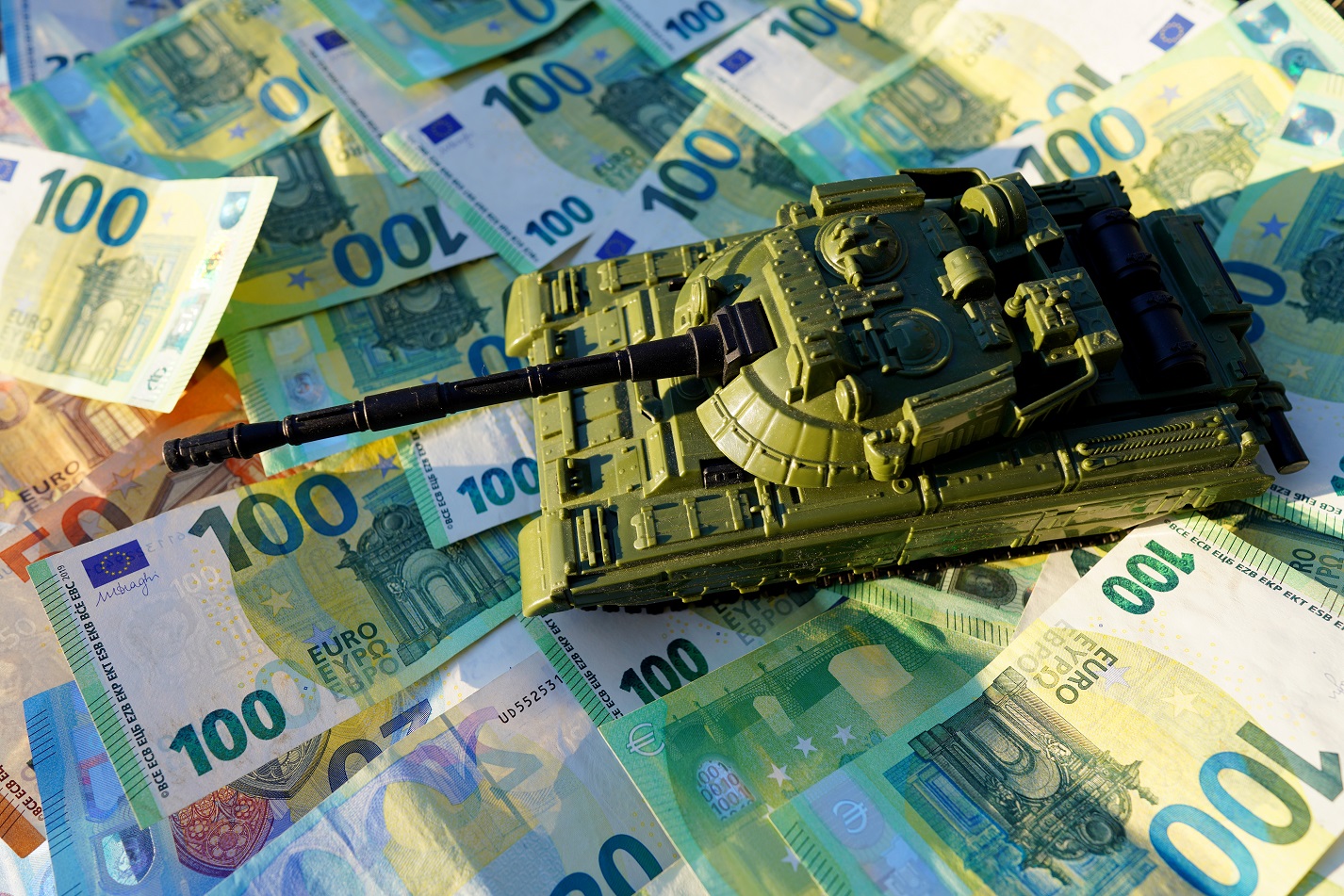
Caution is advised regarding the hopes raised by the "war economy." It's the trendy expression of the moment. Efforts have been made. Since 2022, the EU has increased its military spending by 100 billion euros. New expenditures are planned in the coming months. But we are far from achieving that goal. Only five EU countries allocate more than 2% of their GDP to defense, as NATO generally requires its member countries, while the United States has a military budget of 3.4% of GDP.
Worse, the EU currently lacks the production capacity to quickly develop a defense industry. The war in Ukraine has shown that we are unable to detect material shortages and order private companies to meet public orders – a problem solved by the Americans in 1950 with the Defense Production Act.
The lesson of the day: let's be cautious with announcements.
On the American side, pessimism prevails. The latest statistics are somewhat disappointing. The GDPNOW indicator from the Federal Reserve Bank of Atlanta, which gives an idea of real-time GDP evolution, collapsed last week. A month ago, it was at 3.9%, then it dropped to 2.3% a week ago and is now at -1.5%... in contraction. However, be careful not to overinterpret this indicator which has been widely commented on in financial markets. It is very volatile and fluctuates based on the latest statistics. Furthermore, the observed contraction mainly reflects a strong deterioration in the trade balance. Imports significantly surged in January, with American companies logically stockpiling in anticipation of a trade war. Historically, a rise in imports has never led to a contraction in GDP, let alone a recession.
We cannot rule out that the American economy will slow down. Its growth in 2025 will probably be slightly below consensus at 2.3%. We estimate it could be around 2%. But, objectively, it's still better than in the eurozone where growth is expected to be 1.1% according to Bloomberg analysts' consensus.
The market is very jittery and tends to overinterpret everything. Let's look at the figures before drawing hasty conclusions about the ongoing economic dynamics.
A word on China. The Two Sessions – which gathered China's top officials – defined the objectives for the upcoming year. Industrial policy occupies a major place there and is part of what Beijing calls “new quality productive forces.” The ambition displayed is to further develop artificial intelligence, particularly by fostering cooperation with the BRICS. Inner Mongolia as well as Shanghai and Shenzhen have been presented as major innovation hubs, both for building data centers and fully efficient AI value chains. To watch.
Technical point
On the currency market, the notable fact is obviously the impressive rebound of the euro against almost all its counterparts. The good European news we mentioned in the introduction partly explains the single currency's performance. More technical factors must also be considered, notably the inversion of the correlation between German Bunds yields and US Treasury bonds. They tend to move relatively parallel, and any divergence generally affects the forex market. This time, we saw a massive rise in Bunds yields, while Treasury bonds remained stable. It’s rare. But this also helped the euro's rise. After such an increase in just a few sessions, expect some profit-taking on the EUR pairs. Caution at the start of the week.
The supports and resistances displayed below indicate the low and high points within which the courses should evolve during the week. | Weekly Supports | | Weekly Resistances | |
|---|
| S2 | S1 | R1 | R2 |
| EUR/USD | 1.00678 | 1.0700 | 1.0988 | 1.1011 |
| EUR/GBP | 0.8188 | 0.8290 | 0.8388 | 0.8412 |
| EUR/CHF | 0.9390 | 0.9422 | 0.9602 | 0.9650 |
| EUR/CAD | 1.5209 | 1.5353 | 1.5555 | 1.5590 |
| EUR/JPY | 157.99 | 158.10 | 162.02 | 163.30 |
Announcements to follow
Volatility is expected to remain high, mainly due to the bombastic announcements of the Trump administration. In terms of statistics, US inflation for February will be the most important figure to watch this week. It came in at 3% year-on-year in January. The market needs good news while inflationary pressures persist. For example, according to Bloomberg, the price of an American's breakfast (eggs, bacon, cheese, and coffee) increased by 3% year-on-year. On the central bank side, the Bank of Canada should again lower its key rate by 25 basis points. Future rate cuts will depend on US trade policy. The central bank could refrain from lowering interest rates in the coming months if US tariffs lead to a resurgence of inflation. All this could further increase volatility on CAD pairs.
Below you will find publications and events that should have a major impact on the evolution of currency rates.| Day | Time | Country | Indicator | What to expect? |
|---|
| 12/03/2025 | 13:30 | USA | Consumer Prices (February) | Previous at 3% year-on-year. |
| 12/03/2025 | 14:45 | CAN | Central Bank Meeting | Rate cut by 25 basis points. |
| 13/03/2025 | 13:30 | USA | Producer Prices (February) | Previous at 0.4% month-on-month. |
The information presented in this publication is provided solely for informational purposes and does not constitute investment advice, a sale offer, or a solicitation to buy, and should not in any way serve as a basis or be considered as an encouragement to engage in any investment.