Changing of the Guard at the Fed: What Now?
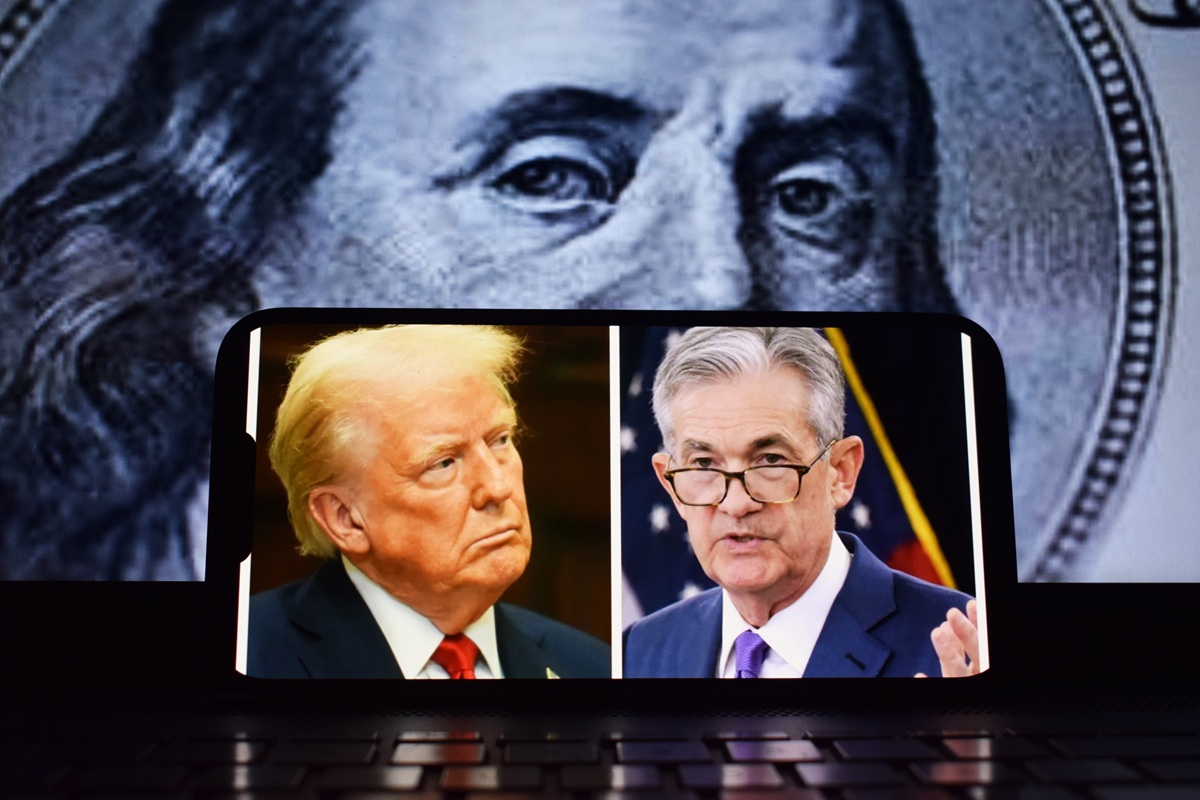
A chapter is turning at the Fed. On May 15, Jerome Powell leaves the presidency of the Fed, and Kevin Warsh, chosen by Donald Trump, is expected to be confirmed by the Senate within the week. Markets are already questioning the independence of the US central bank. At the same time, Christine Lagarde is preparing her first rate hike in a long time, while the weakened dollar slides towards its annual lows.
The macro point
No need to be a soothsayer to know that this transition is not a mere formality. For the first time in the history of the Senate Banking Committee, the vote on the Fed presidency candidate was strictly along partisan lines (13 Republicans for, 11 Democrats against). The market is beginning to understand what this means: an institution that, until now, drew its credibility from its perceived independence, will have to prove that it can still demonstrate it. It's hard to know if Warsh can set an autonomous course in the face of a Trump demanding rates at 1%.
This transition comes in an explosive context. The Strait of Hormuz remains closed, crude prices are abnormally high, and American inflation does not bend. Powell's last decision to keep rates unchanged came with an 8-4 vote, the most contested since 1992. Four dissidents! This speaks volumes about the internal fractures of the FOMC. Warsh, therefore, inherits a divided committee and an American president who keeps a close watch.
On the European side, the situation is almost the opposite. Money markets are now factoring in two ECB rate hikes by the end of 2026, with a 75% chance of a first move as early as June. Christine Lagarde confirmed on Friday that the eurozone is better equipped than before the war in Ukraine to absorb the energy shock. Piero Cipollone goes further: for him, the persistence of inflationary pressures makes the hike increasingly likely. This is a complete reversal from the beginning of the year.
The monetary policy divergence between Washington and Frankfurt will dominate the session. For the first time in a very long time, it is the ECB that is tightening while the Fed tempers. It's likely that this dynamic will sustainably support the euro, especially if Warsh, politically constrained, eases up before inflation is truly tamed.
Technical point
The EUR/USD closed on Friday at 1.1784, up 0.53% on the session, its highest since April 20. Over a month, the pair gains 0.72%; over a year, 4.72%. The sustained breakthrough of 1.1750 now opens the way towards 1.1850, or even 1.2015 (annual high reached on January 27). The dollar suffers from a rare combination: institutional uncertainty, geopolitical premium reduced by hopes of a US-Iran agreement, and rising European rate expectations.
The EUR/GBP trades around 0.8633, in a narrow range before the release of UK Q1 GDP on Thursday. The pound remains under pressure: the BoE has begun its rate-cutting cycle, and British activity figures struggle to convince.
The EUR/CHF is at 0.9150, in a consolidation zone after the April rebound. The Swiss franc traditionally plays the role of a safe haven, but the relative calm on the Iranian front and the renewed appeal of the euro limit its gains.
The EUR/JPY stands at 184.06 after reaching 187.55 in mid-April (decade high). The yen still suffers from the rate differential, despite the hikes initiated by the BoJ. The BoJ's summary of opinions on Tuesday will be scrutinized: any marked hawkish signal could trigger a technical correction towards 181.00.
The supports and resistances displayed below indicate respectively the low and high points within which the rates should move during the week.
| Weekly Supports | | Weekly Resistances | |
|---|
| S2 | S1 | R1 | R2 |
| EUR/USD | 1.1680 | 1.1735 | 1.1830 | 1.1900 |
| EUR/GBP | 0.8580 | 0.8610 | 0.8665 | 0.8710 |
| EUR/CHF | 0.9100 | 0.9130 | 0.9180 | 0.9215 |
| EUR/CAD | 1.5800 | 1.5860 | 1.5970 | 1.6040 |
| EUR/JPY | 182.00 | 183.20 | 185.30 | 187.00 |
Announcements to follow
The US CPI on Tuesday will be the trial by fire for Powell's last decision: a figure above 3.3% (previous reading) would seriously complicate Warsh's path. On Wednesday, it's the euro area's GDP (second estimate) and the US PPI that will take over. Thursday, double shock: UK Q1 GDP and US retail sales, in a European market deserted by Ascension.
Below are the publications and events expected to have a major impact on the currency exchange rate evolution.| Day | Time | Country | Indicator | What to expect? |
|---|
| Tuesday 05/12/2026 | 14:30 | United States | April CPI | Crucial test before Warsh's arrival |
| Wednesday 05/13/2026 | 11:00 | Euro Area | Q1 GDP (2nd est.) | Confirmation or revision of the dynamic |
| Wednesday 05/13/2026 | 14:30 | United States | April PPI | Indication on upstream pressures |
| Thursday 05/14/2026 | 08:00 | United Kingdom | Q1 GDP | Decisive test for the pound |
| Thursday 05/14/2026 | 14:30 | United States | April retail sales | Health of the US consumer |
| Friday 05/15/2026 | 15:15 | United States | April industrial production | + Official start of K. Warsh's term |
The information presented in this publication is communicated to you for purely informative purposes and does not constitute investment advice, an offer to sell, or a solicitation to buy, and should not serve as a basis or be taken into account as an incentive to engage in any investment.