Iran Hits the Gulf: The Conflict Takes on a New Dimension
The weekend marked a turning point. On Sunday, Iran hit six Gulf countries in response to American strikes, a first since the start of the conflict. Brent climbs towards 79 dollars, the dollar rises against all G10 currencies, and bond yields tighten. For central banks, the specter of energy inflation returns to the forefront.
The macro point
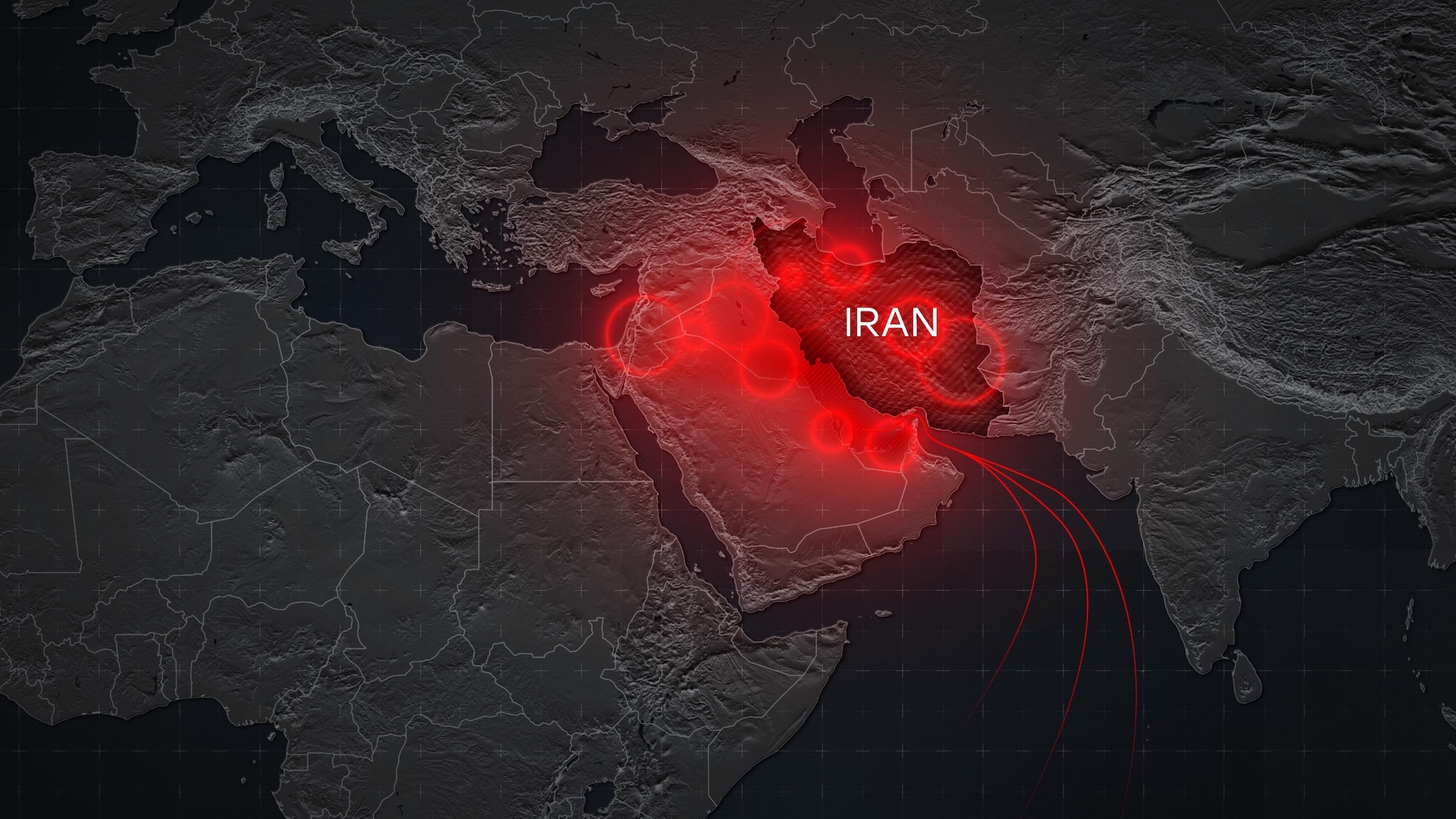
Until now, the conflict involved two players: Washington and Tehran, with the Strait of Hormuz as the front line. This is no longer the case. On Sunday, Iran launched a wave of missiles and drones against the United Arab Emirates, Qatar, Kuwait, Oman, Bahrain, and Jordan, in response to recent American strikes. The Organization of Islamic Cooperation condemned these attacks, and Oman summoned the Iranian ambassador. Gulf monarchies directly targeted: this is a change in the scope of the conflict, not just an increase in intensity.
How did we get here? The sequence started on July 8, when Donald Trump declared the ceasefire with Iran “over,” after the attack on three ships near Hormuz. Since then, the escalation has been methodical: the fourth American strike in a week on Sunday (CENTCOM mentions hundreds of targets) after the attack on a container ship under a Cypriot flag. Tehran has declared the strait “closed until further notice,” which the American command denies. On the ground, the evidence is clearer than the statements: only six ship crossings between Thursday evening and Friday morning, compared to 18 to 22 per day at the beginning of July. And Washington revoked the exemption on Iranian oil sanctions, effective July 17.
Markets reacted without panic, but without ambiguity. Brent rose towards 79 dollars on Monday morning (+4% in session, +5.4% over the past week), the highest since June 22, about 9% above its pre-war level. The most significant movement is perhaps in bonds: the US 2-year yield reached 4.23%, a high since February 2025. The message is clear: the market is no longer pricing in rate cuts, it is pricing in higher rates for longer. In this context, the dollar rose on Monday against all G10 currencies.
The paradox of the situation is that this shock comes precisely when inflation was receding. In the eurozone, the flash estimate for June was 2.8% over a year, after 3.2% in May, thanks to the oil relaxation following the mid-June agreement, now questioned. The ECB, which raised its deposit rate to 2.25% on June 17 (the first increase since 2023), deliberately abandoned any forward guidance. The market, however, has decided: about a 70% probability of another increase in September. On the American side, the FOMC minutes from June revealed that several members deemed an increase already justified, and Kevin Warsh repeated in Sintra that inflation remained “too high.” The current range of 3.50%-3.75% could therefore be just a floor.
As long as traffic at Hormuz does not normalize, the bias will remain favorable to the dollar and unfavorable to the euro, the currency of a net energy-importing zone. However, one must avoid extrapolation: Iranian strikes on Gulf monarchies remain targeted and of low intensity, Brent remains far from its war peaks close to 120 dollars, and several analysts see the barrel contained in the upper range of 70–80 dollars this summer. A resumption of diplomatic channels - a Qatari delegation has gone to Tehran - would bring down the risk premium as fast as it rose.
Technical point
The euro/dollar was around 1.1404 on Monday at the opening, compared to 1.1435 on Thursday. The euro finds itself in an uncomfortable position: rate support exists (the ECB is tightening and a new increase for September is priced at 70%) but it is dominated by the safe-haven status of the greenback and a US 2-year yield at 4.23%. Since the beginning of the year, the single currency has fallen about 2.8% against the dollar. In the very short term, the peace judge will be American inflation on Tuesday: an upward surprise would further strengthen the dollar before the FOMC on July 29; a decline in line with the consensus (?3.8%) would offer a breather to the pair.
The EUR/CHF is evolving around 0.922, close to its lows of the year. As long as geopolitics dictates the tempo, the pair's rebound potential seems limited to us. The calm episodes of June only produced modest and ephemeral rebounds.
The yen does not benefit from the risk aversion: the EUR/JPY is around 184.4 and the USD/JPY around 161.7. Japanese sovereign bonds were also sold on Monday, indicating that the rate differential with the United States continues to trump the safe-haven reflex. For importers billed in yen, the current levels remain historically favorable.
The rebound in crude supports the petro-currency: the EUR/CAD is exchanged around 1.615, compared to 1.62 on Thursday. The Bank of Canada will make its decision on Wednesday, accompanied by its monetary policy report: the status quo at 2.25% is the consensus, as the bank is torn between a sluggish economy and inflation revived by energy. A net oil exporter, Canada sees its national income supported by the barrel's rise, a factor of resilience for its currency.
Discreet but solid: the EUR/GBP has declined to 0.852, compared to about 0.862 at the end of June. The pound benefits from the carry provided by British rates. The activity data expected across the Channel this week will determine if this support remains justified.
The supports and resistances displayed below indicate the low and high points within which prices should evolve during the week.
| Weekly Supports | | Weekly Resistances | |
|---|
| S2 | S1 | R1 | R2 |
| EUR/USD | 1.1180 | 1.1290 | 1.1520 | 1.1630 |
| EUR/GBP | 0.8350 | 0.8430 | 0.8600 | 0.8690 |
| EUR/CHF | 0.9035 | 0.9125 | 0.9310 | 0.9400 |
| EUR/CAD | 1.5830 | 1.5990 | 1.6310 | 1.6470 |
| EUR/JPY | 180.70 | 182.55 | 186.25 | 188.10 |
Announcements to follow
The week is dense, and it has a guiding thread: inflation. The American CPI of June will be released on Tuesday at 2:30 PM, ninety minutes before Kevin Warsh's very first hearing before the House of Representatives. The timing couldn't be more uncomfortable for the new Fed chairman, who will appear before the Senate on Wednesday. The consensus expects a decline in the CPI towards 3.8% over a year (after 4.2% in May), reflecting the oil relaxation in June; the current rise in crude prices will not yet be included.
On Wednesday, the Bank of Canada will make its decision and release its monetary policy report, while China will unveil its GDP for the second quarter. On Friday, Eurostat will confirm (or not) the flash estimate of June's inflation in the eurozone. A confirmed European figure at 2.8% will probably not be enough to divert the ECB from its trajectory: it is July's oil, not June's inflation, that will dictate the September decision.
Below you will find the publications and events that should have a major impact on the evolution of currency rates.| Day | Time | Country | Indicator | Expectation / Prev. |
|---|
| 07/14/2026 | 2:30 PM | USA | CPI Inflation (June) | Consensus ≈3.8% y/y after 4.2% in May; core ≈2.9% |
| 07/14/2026 | 4:00 PM | USA | K. Warsh Hearing (House) | First semi-annual testimony of the Fed chairman |
| 07/15/2026 | 4:00 AM | China | GDP Q2 | After +5.0% y/y in Q1 |
| 07/15/2026 | 2:30 PM | USA | Producer Prices (June) | Upstream pressure barometer |
| 07/15/2026 | 3:45 PM | Canada | BdC Decision + Report | Status quo expected at 2.25% |
| 07/15/2026 | 4:00 PM | USA | K. Warsh Hearing (Senate) | Any hint of a rise in September |
| 07/16/2026 | 2:30 PM | USA | Retail Sales (June) | After +0.9% in May |
| 07/17/2026 | 11:00 AM | Eurozone | Final HICP (June) | Flash: 2.8% y/y after 3.2% in May |
| 07/17/2026 | 4:00 PM | USA | Michigan Confidence (prelim.) | Inflation expectations monitored |
The information presented in this publication is provided for informational purposes only and does not constitute investment advice, an offer to sell, or a solicitation to buy, and should not in any way serve as a basis or be considered as an inducement to engage in any investment.