Ormuz: open, closed, open, closed...
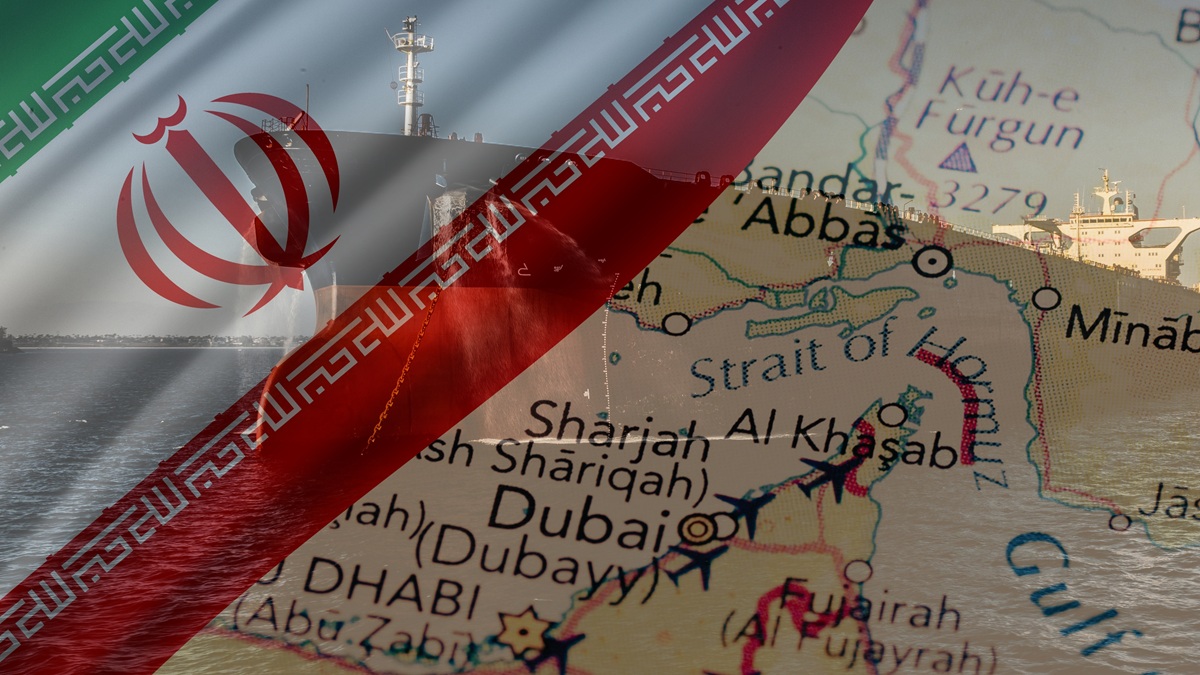
Dramatic turn of events this weekend. After declaring the Strait of Hormuz "completely open" on Friday, causing an 11% collapse in oil, Iran reversed course on Saturday and closed the strait. The ceasefire expires on April 21. Volatility is back. The dollar wavers between its role as a safe haven and the growing distrust of investors towards it.
The macro point
The sequence is breathtaking. On Thursday, April 17, Donald Trump announced a 10-day ceasefire between Israel and Lebanon. Subsequently, on Friday, Iranian Foreign Minister Abbas Araghchi declared the Strait of Hormuz "completely open" to commercial shipping. Immediate reaction: WTI crude plunged 11.4% to $83.85 a barrel, Brent fell 9% to $90.38. The S&P 500 and Nasdaq hit new all-time highs. The euphoria lasted less than 24 hours.
On Saturday morning, the Iranian Revolutionary Guard Corps (IRGC) announced that control of the strait had "returned to its previous state." Tehran justified this reversal by maintaining the American naval blockade on Iranian ports, described as "piracy." According to Bloomberg, several tankers turned back in the Persian Gulf. Trump responded by stating Iran tried to "play clever." The chief Iranian negotiator, Mohammed Bagher Qalibaf, was unequivocal: "It is impossible for others to pass through the Strait of Hormuz while we cannot." How to explain such a reversal?
In reality, Friday's opening was conditional on the ceasefire in Lebanon and a gesture of goodwill by the Americans. However, Trump immediately reminded that the American naval blockade would remain "until a nuclear agreement is concluded." For Iran, this was a red line. Moreover, the ceasefire in Lebanon itself is fragile: a French peacekeeper and two Israeli soldiers were killed this weekend in southern Lebanon. Macron accused Hezbollah of being responsible for the French soldier's death. Clearly, de-escalation is anything but assured.
At the macroeconomic level, the consequences are significant. ING estimates that nearly 13 million barrels per day remain disrupted. The International Energy Agency calls the situation "the largest supply disruption in the history of the global oil market." American inflation (CPI) already jumped to 3.3% in March, driven by gasoline (+21% in one month). From the European side, the ECB revised its inflation projections to 2.6% for 2026 and lowered its growth forecast to 0.9%. Rates remain unchanged at 2.00% (deposit rate) since March, and the market now anticipates only two 25 basis point hikes this year, down from three a few weeks ago.
The Fed, on its end, maintains the status quo at 3.50-3.75%. The American job market remains strong (178,000 job creations, unemployment at 4.3%), ruling out any short-term easing. The 10-year US yield ended the week at 4.31%. The market anticipates a status quo at the FOMC on April 28-29 with a 99% probability.
Our opinion: the open-close sequence of Hormuz in less than 24 hours perfectly summarizes the current instability. The market will open on Monday in a context of high uncertainty. Companies exposed to currencies would be wise not to let their guard down. Volatility will remain high as long as the US-Iran ceasefire (expiring on April 21) is not extended. We think oil will rise again on Monday, which would support the dollar in the short term. But the underlying trend remains a weakening of the greenback: the DXY has lost over 10% since its peak in January 2025 and institutional investors' distrust of the dollar is now backed by figures.
Technical point
On the foreign exchange market, the US dollar experienced a roller-coaster week. The DXY (dollar index) fell to 98.06 on Wednesday, a six-week low, buoyed by ceasefire hopes. It then stabilized around 98.20 on Friday. The re-closure of the strait on Saturday should give it a boost on Monday, due to its safe haven effect. But according to Deutsche Bank, the dollar's safe haven status is a "myth": over a year, the greenback has lost more than 10% and the dollar-equities correlation is close to zero. Is it likely that this distrust will continue? Probably.
The EUR/USD reached 1.1835 on Thursday, its highest since the start of the conflict in Iran, before retreating to 1.1764 on Friday. Over the past month, the euro strengthened by +2.7% against the dollar. The week's range was between 1.1672 (Monday) and 1.1835 (Thursday). With the re-closure of Hormuz, a return towards 1.17 is possible very short term, but the euro's upward trend remains intact as long as the support at 1.1650 holds.
The EUR/GBP trades in a narrow corridor around 0.8700. The pound benefits from the general retreat of the dollar, with the GBP/USD at 1.3550. The UK flash PMIs expected on Wednesday will be crucial for the next push. The Swiss franc, a traditional safe haven, melted like snow in the sun this week with the EUR/CHF up towards 0.9220. But the re-closure of Hormuz could bring flows back to the CHF from Monday.
The yen is acting up. The EUR/JPY trades around 186.60, the USD/JPY fell to 158.60. The yen benefits from the double effect of the drop in oil (Japan is a major net energy importer) and the decline in US yields. The Bank of Japan, which has gradually raised its rates, could stand out if de-escalation confirms. The EUR/CAD remains around 1.62, the Canadian dollar under pressure due to its strong correlation with oil prices. It's difficult to know if the CAD can recover as long as the oil situation remains unclear.
The support and resistance levels displayed below indicate the low and high points within which the prices are expected to move during the week.
| Weekly Supports | | Weekly Resistances | |
|---|
| S2 | S1 | R1 | R2 |
| EUR/USD | 1.1720 | 1.1650 | 1.1835 | 1.1920 |
| EUR/GBP | 0.8660 | 0.8620 | 0.8740 | 0.8790 |
| EUR/CHF | 0.9160 | 0.9100 | 0.9270 | 0.9340 |
| EUR/CAD | 1.6100 | 1.6020 | 1.6260 | 1.6360 |
| EUR/JPY | 184.50 | 183.00 | 187.80 | 189.50 |
Announcements to follow
The week of April 20 promises to be decisive. On the geopolitical front first: the US-Iran ceasefire expires on April 21. Its extension (or not) will determine the trajectory of oil and, by extension, that of the dollar. Negotiations between Washington and Tehran, through Pakistani mediation, are scheduled for Monday. The market will be extremely reactive to any statement.
On the economic front, the highlight will be the release of April's flash PMIs on Wednesday, April 23, for France, Germany, the eurozone, and the United States. These indicators will provide a first snapshot of economic activity in the context of the energy crisis. In the eurozone, March's services PMI had already dropped to 50.2, the lowest since May 2025. A drop below 50 would be a strong signal of contraction. On the US side, retail sales (Tuesday) and durable goods orders (Thursday) will help assess consumer resilience to the energy spike.
Below are the releases and events expected to have a significant impact on the course of currencies.| Day | Time | Country | Indicator | What to Expect? |
|---|
| April 21, 2026 | 2:30 PM | United States | Retail sales (March) | Cons.: +0.4% m/m | Prev.: +0.2% |
| April 23, 2026 | 10:00 AM | Eurozone | Flash composite PMI (Apr.) | Previous: 50.9 |
| April 23, 2026 | 3:45 PM | United States | Flash composite PMI (Apr.) | Previous: 53.5 |
| April 24, 2026 | 2:30 PM | United States | Durable goods orders (March) | Cons.: +0.6% m/m |
The information presented in this publication is provided for informational purposes only and does not constitute investment advice, an offer to sell, or a solicitation to buy, and should not under any circumstances serve as a basis or be considered as an incentive to engage in any investment.