Tightening Against the Barrel
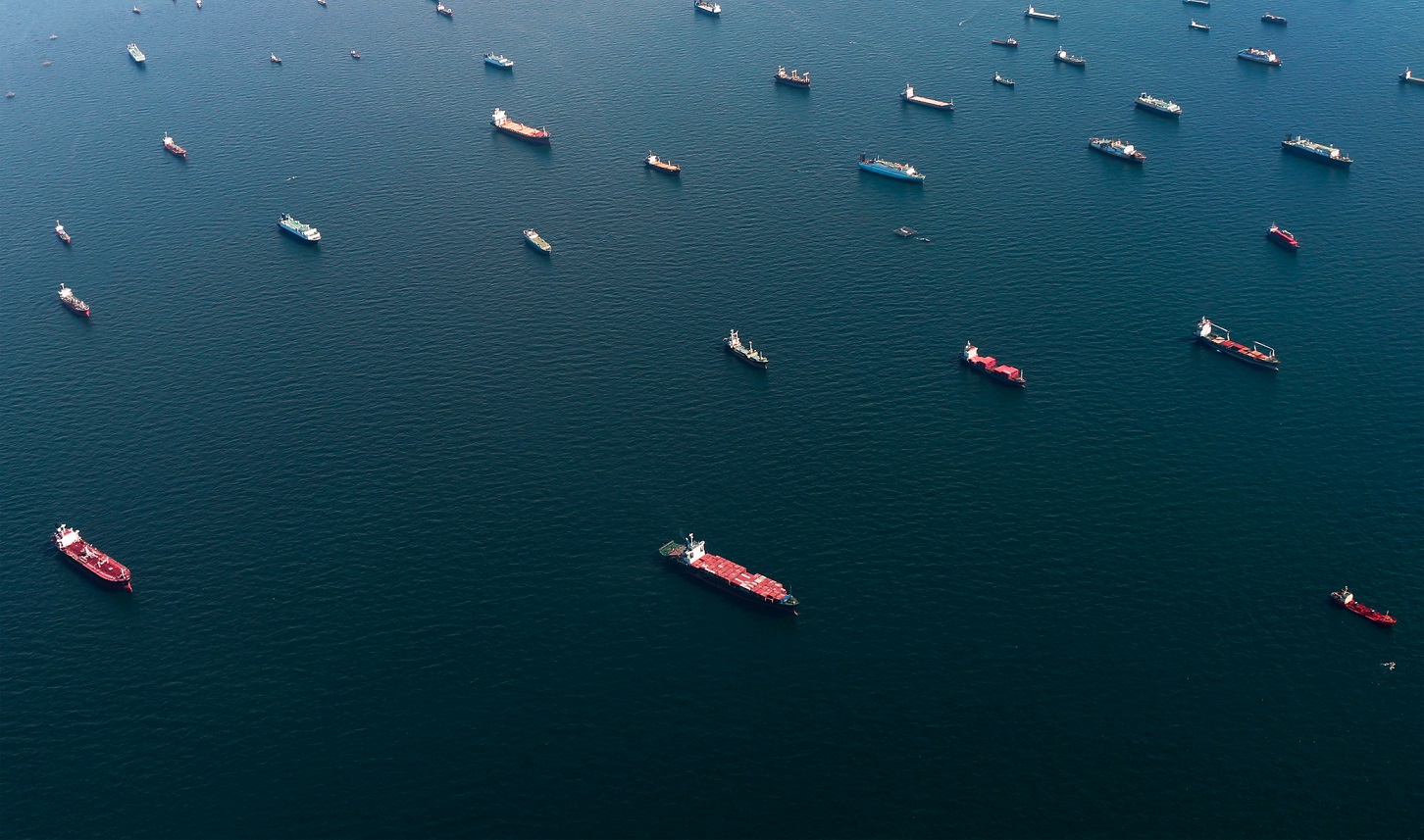
Washington struck three Iranian tankers this weekend, Tehran retaliated and announced a "restricted maritime zone" beyond Hormuz. Brent rises toward $97 this Monday. In the coming nine days, three central banks will tighten or consider it: Frankfurt on Thursday, Washington on the 16th, Tokyo on the 18th. All against inflation that monetary policy does not create.
The macro point
Let's start with the essentials. Eurozone inflation rose to 3.3% in August, its highest since September 2023. But look at where it comes from before concluding: energy jumps to 14.3% year-on-year, while the core falls, and services slow down. In short, everything comes from the barrel, and nothing from the domestic engine.
In the United States, the same story. The consumer price index came out at 3.4% year-on-year in July, down for the second consecutive month, and the core fell to its lowest level since March 2021. Again, only energy pushes up. On both sides of the Atlantic, the core of inflation slows while its periphery ignites.
Yet, everyone is tightening. The ECB will raise its deposit facility to 2.50% on Thursday, a move the market already fully anticipates. The Fed meets on the 15th and 16th of September with an increased likelihood of a rate hike to around 62% after Friday's publication: 162,000 job creations in August, nearly three times the consensus. The Bank of Japan follows on the 18th. Three central banks, nine days.
How to explain this gap between a calming core of inflation and central banks hardening? Through assurance. A fourth consecutive month of energy-driven inflation eventually passes on to wages and selling prices: these are second-round effects, and central bankers prefer to pay the premium now rather than the bill later. The market follows them without reservation, as it already prices in two additional hikes by summer 2027.
The objection deserves to be raised, and a governor formulates it best. Andrew Bailey, who maintained the UK benchmark rate at 3.75% at the end of July, reminds that monetary policy can do nothing about the global price of energy: its role is limited to preventing the rise from settling in. On the supply side, the situation is marginally improving — transit through Hormuz reached its highest daily volume since the start of the conflict at the end of August, and OPEC+, meeting on Sunday, leaves its quotas unchanged for October. But the US Energy Agency does not expect Middle Eastern production to return to pre-war levels before 2027, and the weekend just reminded us how quickly the barrel can bounce back. Betting on a rapid energy disinflation today is more of a gamble than a scenario.
Technical point
The euro-dollar remained deceptively calm: 1.1590 at the ECB reference on September 1st, 1.1613 at Monday's indicative opening, a 0.5% gain in a month as the ECB is about to raise rates and the Fed hesitates to do the same. The essential is already paid: Thursday's increase is 100% priced in, so the euro will not rise because the ECB rises, it will rise if Lagarde validates the following path. On the American side, the 16th's hike is at 62%: the asymmetry lies in the remaining 38%, which Friday's inflation will decide. We see the pair between 1.1540 and 1.1700 by then, with 1.1780 if the U.S. number disappoints and 1.1450 if it surprises.
Two currencies, however, are not doing what they should. The Swiss franc first: while the conflict worsened in August, the EUR/CHF went from 0.9306 to 0.9401, a 1% gain by the euro. A haven retreating when risk rises is a market that has stopped treating the war as a shock to treat it as a backdrop. The Canadian dollar next: Brent increased by more than 10% in four weeks, the Bank of Canada maintained its rate at 2.25% on September 2nd signaling upward risks, and the EUR/CAD hasn't moved, at 1.6062. The explanation is in one word: tariffs. The aggressive duties reinstated on Canadian exports cancel what oil brings. On CAD flows, the oil correlation no longer protects.
The only pair that really moved is the euro-yen, at 181.14 compared to about 186 at the end of July. The trigger came from Tokyo, where Governor Ueda and council member Hajime Takata advocated last week for rate hikes to be conducted flexibly rather than at a fixed semi-annual pace. The dollar-yen dropped by more than 2% on Thursday to 155.28, the yen's best week since the joint Tokyo-Washington intervention at the end of July. It's a carry trade unwinding: those who borrowed yen at 1.00% to invest elsewhere are buying back their position before the Bank of Japan meeting on September 18th.
Should you chase after it? The fuel is largely consumed: according to the CFTC, leveraged fund short positions fell from nearly 138,000 contracts at the end of June to 59,526 on August 11th, and the rate gap with the United States remains wide. Our advice: for a yen buyer, it's better to spread purchases on either side of September 18th than to stake everything on a single meeting. The pound, meanwhile, is backed by its differential: at 0.8598, the EUR/GBP benefits from the 150 basis points separating the Bank of England from the ECB, a gap that Thursday will narrow to 125 — enough to support a gradual rise before the British meeting on the 17th.
The supports and resistances shown below indicate the respective lows and highs within which prices should evolve during the week.
The supports and resistances shown below indicate the respective lows and highs within which prices should evolve during the week.
| Weekly Supports | | Weekly Resistances | |
|---|
| S2 | S1 | R1 | R2 |
| EUR/USD | 1.1450 | 1.1540 | 1.1700 | 1.1780 |
| EUR/GBP | 0.8480 | 0.8540 | 0.8650 | 0.8700 |
| EUR/CHF | 0.9270 | 0.9330 | 0.9450 | 0.9500 |
| EUR/CAD | 1.5850 | 1.5960 | 1.6160 | 1.6250 |
| EUR/JPY | 177.80 | 179.50 | 183.00 | 185.00 |
Announcements to follow
The week opens on a quiet session: U.S. and Canadian markets are closed this Monday for Labor Day, and liquidity will remain thin until Tuesday. Caution, therefore, on orders placed today: in a thin book, a modest move costs more than it should.
It closes with two appointments that really matter. Thursday, the ECB announces its decision at 14:15 and publishes its new projections, which Christine Lagarde will comment on at 14:45: it is the trajectory beyond September that will set the price, not the hike itself. Friday, the U.S. August inflation falls at 14:30, the last figure before the FOMC on the 15th and 16th. Between the two, keep an eye on Hormuz: the slightest precision on the "restricted maritime zone" announced by Tehran will transmit faster to your hedges than any projection from Frankfurt.
Below you will find the publications and events likely to have a major impact on currency price developments.| Day | Time | Country | Indicator | expectation / prev. |
|---|
| Mon. 09/07 | — | U.S. / Canada | Labor Day: markets closed | Reduced liquidity, amplified movements |
| Tue. 09/08 | 01:50 | Japan | Q2 2026 GDP (final estimate) | Prelim.: +0.3% q/q, +1.1% y/y |
| Wed. 09/09 | 03:30 | China | August CPI | July: -0.1% m/m, +0.5% y/y |
| Thu. 09/10 | 08:00 | Germany | August HICP (final) | Confirmation expected of flash at 2.9% |
| Thu. 09/10 | 14:15 | Eurozone | ECB decision + projections | 25 bp increase to 2.50% fully anticipated |
| Thu. 09/10 | 14:30 | U.S. | Producer prices (August) | First signal before Friday's CPI |
| Thu. 09/10 | 14:45 | Eurozone | Lagarde press conference | The real issue: the trajectory beyond September |
| Fri. 09/11 | 14:30 | U.S. | August CPI | July: 3.4% y/y; core 2.5% |
| Fri. 09/11 | 16:00 | U.S. | Consumer confidence (Michigan) | August: 51.7 |
The information presented in this publication is provided for informational purposes only and does not constitute investment advice, an offer to sell, or a solicitation to buy, and should not in any case be used as a basis or be considered as an incitement to engage in any investment.