Trump is Back!
The information presented in this publication is communicated to you for informational purposes only and does not constitute investment advice, or an offer to sell, or a solicitation to buy, and should not be used as the basis or considered as an inducement to engage in any investment.
The macro point
The European Central Bank (ECB) is making its comeback this week. If you’re expecting it to unveil a schedule for rate cuts, you’re going to be disappointed. As in previous weeks, the ECB is expected to send mixed signals and leave doubt hanging over the timing of the first cut.
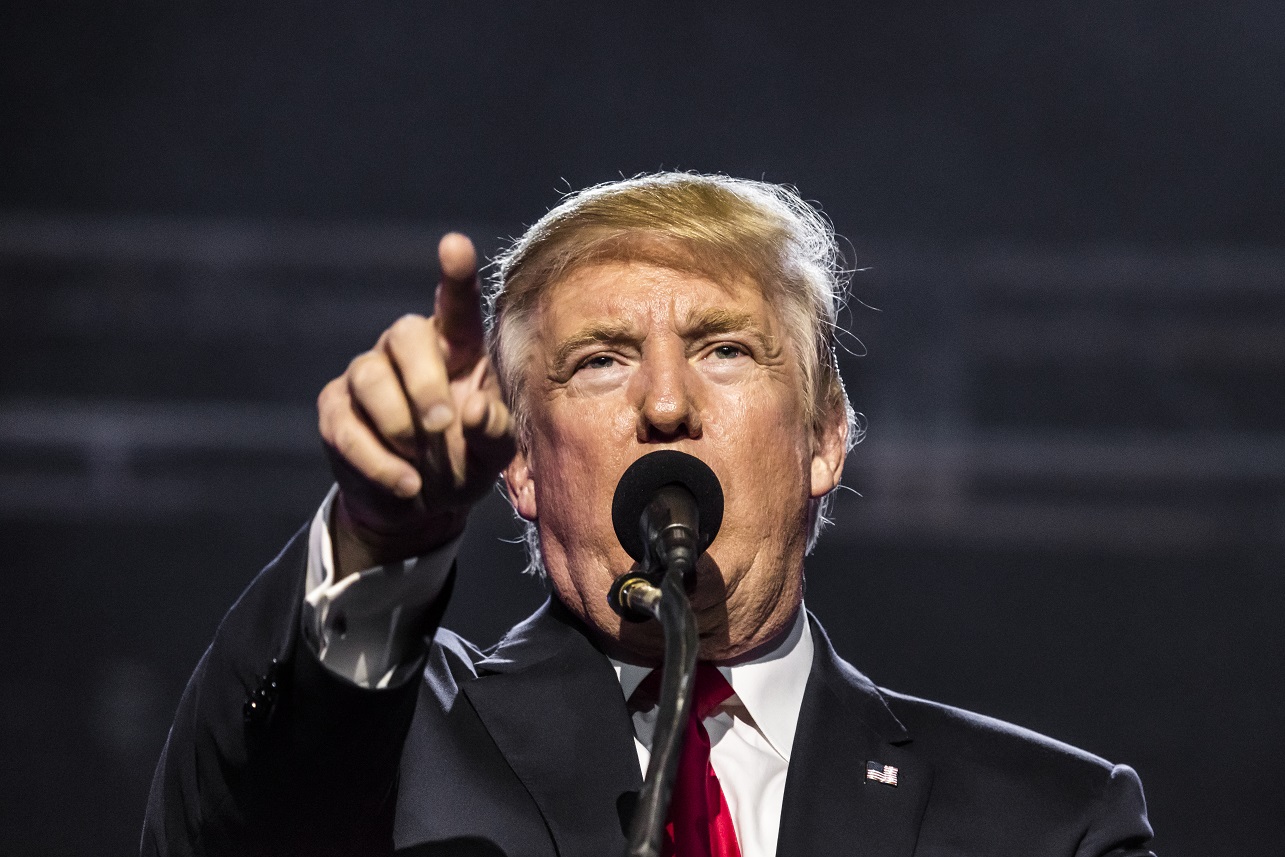
2024 is an intense election year. As expected, former President Donald Trump has largely won the Iowa caucus, the first stage of the Republican primary (51% of the votes). He confirms his status as a favorite. Barring any last-minute surprises (notably in the event of ineligibility decided by the courts), Trump is expected to be the Republican Party’s candidate in the presidential election next November 5 against incumbent President Joe Biden. According to a majority of analysts, this is bad news. In a report published last week, Commerzbank warned against a challenge to the independence of several American institutions, including the Federal Reserve (Fed), in the event of a Republican victory. It goes without saying, according to the German bank, this would be negative for dollar-denominated assets (stocks and bonds topping the list). Important point: for now, the candidate has never mentioned this possibility. He does not plan to take control of monetary policy by political means. So, it seems as though the market is playing with fear.
Let’s analyze the main lines of his program to see more clearly. On one hand, there are the measures that are difficult or even impossible to implement. For example, he plans to create ten “freedom cities” the size of Washington (177.0 km², or more than one and a half times the area of Paris) where “we will go to the office in flying cars.” This is the mobility aspect. He is also confident in his ability to end the war between Ukraine and Russia in “24 hours.” That’s optimistic. On the other hand, there are measures more likely to be implemented, particularly the economic protectionism aspect. He wants a universal tariff of 10% on all products imported into the United States and the elimination over a four-year period of Chinese imports of electronics, steel, and pharmaceutical products. All this could lead to an intensification of the trade war. One can easily imagine that countries subjected to a universal tariff of 10% may decide on retaliatory measures. If this is the case, Trump has threatened to escalate further by increasing customs tariffs even more... In short, it can be endless. What history has taught us is that high tariffs are negative for growth because they reduce trade, lead to a revival of inflation, and harm consumption. But it is obviously more complex. Tariffs can also encourage Ricardian relocations (based on a comparative advantage) in the countries where the goods produced are sold. This can be done through subsidies. It is somewhat what the United States is doing with the semiconductor sector. In order to reduce the sector’s dependence on China and a possible intensification of the trade war, Washington has subsidized the relocation of factories on American soil by putting billions of dollars on the table. It’s effective. As we can see, economic protectionism is not necessarily bad.
What about currencies? The consensus sees a resurgence of protectionism as synonymous with a decline in the dollar. Again, it’s not so simple. The evolution of the greenback will depend on many other parameters, such as the amplitude of the Fed’s rate cut cycle and how expansionist the US fiscal policy will be. These are two factors that certainly have more importance on the dollar’s performance in the medium term than a possible Trump victory. For us, the return of the Republican to the White House should mainly increase volatility in the foreign exchange market. In reaction to the controversies launched by Trump, we could see abrupt movements on the dollar, and potentially on the euro and the yuan. All this against a backdrop of already high geopolitical risk, stalled global growth, and trade routes we thought were safe but ultimately are not. In itself, this is already conducive to the return of volatility.
Technical point
In the forex market, the dollar index reached a one-month high following Trump’s victory. Adding to this the uncertainties concerning the pace of rate cuts on both sides of the Atlantic (a topic we discussed at length last week), everything logically leads to a decline in EUR/USD. The pair has dropped by 1.4% since the beginning of the year. We expect the downward movement to continue. Against other counterparts, the euro is rising. The EUR/JPY progression is the most striking phenomenon of the past week (+2.8% since the beginning of the year). Now that traders understand that the Bank of Japan will not be normalizing its monetary policy soon, sellers are having a field day on the Japanese yen. The euro is also rising against the Canadian dollar (CAD) – but to a lesser extent. This is mainly due to a CAD decline, with the currency being penalized by the very low level of commodities, particularly oil. This is, in our opinion, a lasting phenomenon. The supports and resistances displayed below indicate the low and high points within which prices should evolve during the week. | Weekly Supports | | Weekly Resistances | |
|---|
| S2 | S1 | R1 | R2 |
| EUR/USD | 1.0650 | 1.0734 | 1.1055 | 1.1099 |
| EUR/GBP | 0.8454 | 0.8511 | 0.8699 | 0.8721 |
| EUR/CHF | 0.9123 | 0.9244 | 0.9456 | 0.9501 |
| EUR/CAD | 1.4411 | 1.4511 | 1.4745 | 1.4810 |
| EUR/JPY | 156.44 | 158.44 | 161.88 | 162.67 |
Announcements to follow
This week, central banks are returning. The European Central Bank (ECB) will be the main focus. Increasingly, analysts expect the institution to cut rates before the Fed (which would strengthen the euro’s downward bias against the dollar). The arguments for this scenario are numerous. The disinflation process continues smoothly in the eurozone. The 2% inflation target is now attainable in the medium term. According to the ECB’s latest projections, the consumer price index should reach 2.1% in 2025. More detailed inflation measures also point in this direction. The PCCI (Persistent and Common Component of Inflation) index excluding food and energy, the central bank's favorite indicator for measuring inflationary pressures in the eurozone, fell below 2% in November. This is very encouraging. Finally, everything indicates that the price-profit loop that fueled price increases in part of 2023 is no longer an issue. The fight against inflation is not completely over. But everything indicates that the worst is now behind us. That’s for the economic part. We know that the ECB also considers other parameters, including political ones, to conduct monetary policy. In the past, it has often been criticized for its excessive caution. It’s not unlikely that it might make this mistake again by preferring that the Fed initiates the rate-cutting cycle instead of it, even though the economic situation calls for it. Below you will find publications and events that should have a major impact on the evolution of exchange rates.| Day | Time | Country | Indicator | What to Expect? |
|---|
| 01/24/2024 | 16:00 | CAN | Central Bank Meeting | Main interest rate maintained at 5% |
| 01/25/2024 | 14:15 | EUR | Central Bank Meeting | Main interest rate maintained at 4.50% and deposit rate at 4.00%. |
| 01/25/2024 | 14:30 | USA | Previous at 4.9% | Previous at -10.5. |
| 01/26/2024 | 14:30 | USA | Core PCE Index (December) | Previous at 3.2% year-on-year and 0.1% month-on-month |