USA-Iran: Markets Signed Before Tehran
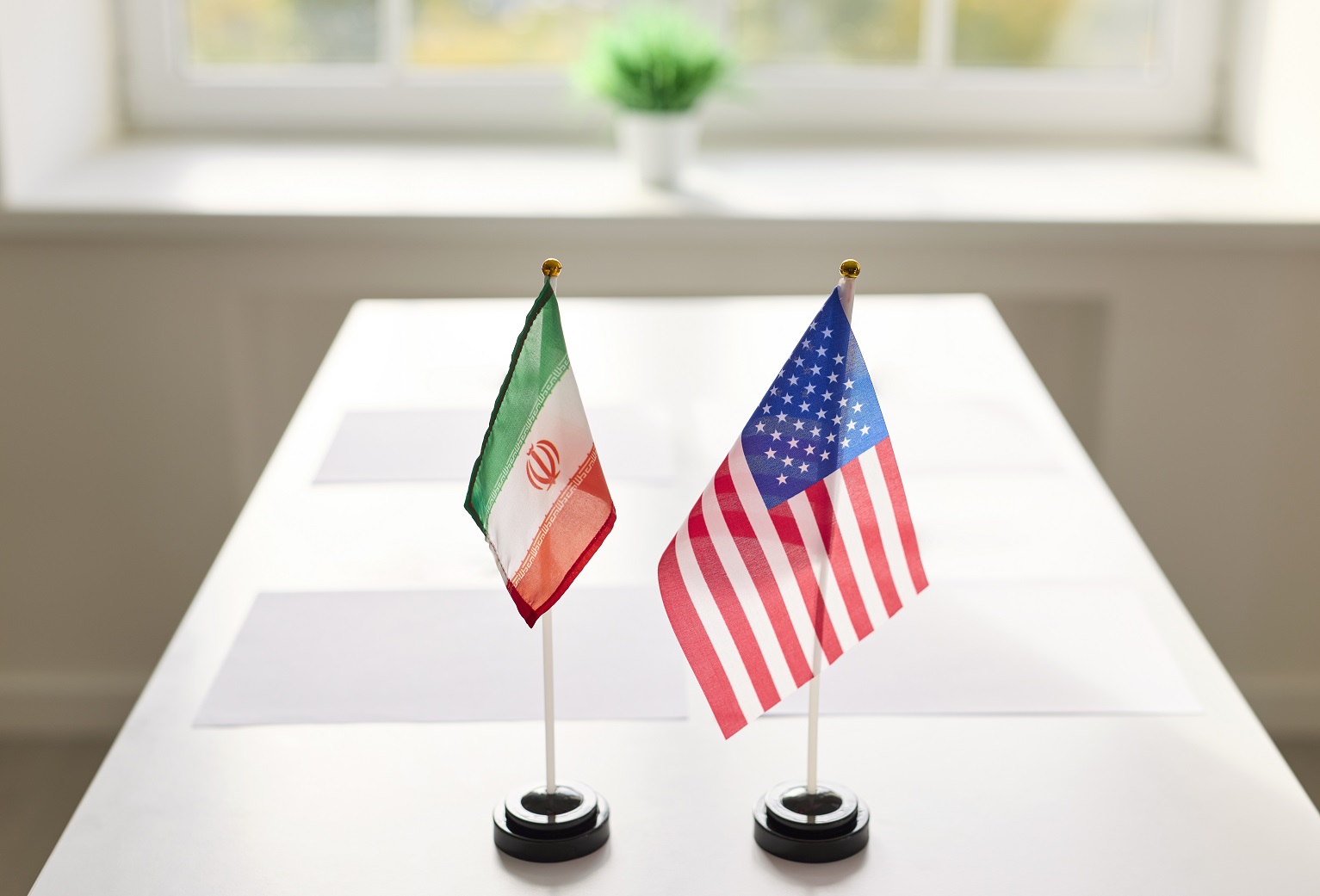
The market has decided. Diplomats, however, are still hesitating. The announcement of an agreement between Washington and Tehran was enough to cause oil to plummet and stocks to soar. Yet nothing is signed: the signature, constantly postponed, is now mentioned for June 19, and the two sides do not describe the same text. The dollar and the Swiss franc are retreating but on very fragile bases.
The macro point
Let's take this calmly. Yes, there was an announcement. And it's a major event in itself after three and a half months of war. But an announcement is not an agreement. Donald Trump alternately asserted a signing 'Sunday', then 'Monday'; Tehran immediately denied it, with its spokesperson calling for caution 'due to the instability of the opposing side.' The date shifts to June 19. This ping-pong of contradictory statements should, in itself, invite moderation.
More importantly, what does this text contain? No one knows precisely, and that's the problem. The only certainty shared by both sides is a ceasefire including Lebanon. For the rest, there is a significant disparity: Tehran mentions the control of the Strait of Hormuz, the right to enrich its uranium, and the unblocking of 24 billion dollars of frozen assets, while Washington speaks of nuclear dismantlement and the full reopening of Hormuz. Two irreconcilable readings of the same document. And in form, it is less of a treaty than a 60-day ceasefire with a negotiation protocol: an agreement to discuss in principle, but not yet on substance. A real and welcome first step but not peace.
And yet, the markets have already popped the champagne. Brent is plummeting around 83-84 dollars this Monday (~5% in the session), the lowest since March and erasing most of the war premium accumulated since February when it exceeded 110 dollars - even though it remains more than 20% higher than its pre-conflict level. The dollar is retreating, Asian and European markets are soaring, and gold is rebounding over 2% to around 4,320 dollars an ounce: the agreement has melted expectations of Fed rate hikes (the likelihood of a hike by December has dropped to 49%, compared to 69% a week earlier), which revives the appeal of the metal. Operators anticipate the return of Iranian crude and the end of supply disruptions. They are taking the lead - that's their job - but also a gamble.
One detail further makes us cautious about the real impact of this announcement. It fell on June 14, Donald Trump's 80th birthday, which he celebrated by organizing a UFC fight on the White House lawn, a year after hosting a military parade for his 79th. The coincidence is probably not one. In our view, this timing serves communication and the ego of the White House occupant as much as diplomacy. An agreement announced for a photo is not an agreement signed on substance. This is precisely what encourages us not to take market enthusiasm at face value.
So let's remain measured. De-escalation is a good fundamental news, and we welcome it. But the market is dealing with an agreement that does not yet exist on paper, with divergent terms and a signature that has already been postponed several times. It is likely that volatility will resume around June 19, in one direction or another.
Technical point
The great wartime refuge retreats with the hope of peace, and the euro benefits, further supported by a ECB that has just raised its deposit rate to 2.25% and by an energy relaxation that eases the import bill of the zone. The EUR/USD briefly crossed 1.1620 this Monday, up from Friday's close (1.1557). Caution though not to overinterpret this movement: the potential for a drop in the greenback is doubly constrained, by a still favorable rate differential and by sticky American inflation at 4.2%. If the June 19 signing slips, the dollar will quickly regain its safe-haven status and on Wednesday, the Fed could disrupt matters. Probable range: a test of 1.1660 or even 1.1730 if the agreement is confirmed, a return to 1.1500 at the slightest hitch.
The same logic as the dollar, even more sensitive. The EUR/CHF has risen to around 0.9260 (against 0.9215 on Friday) as hedges unwind, provided the agreement holds. But the franc remains the barometer of geopolitical stress: should an incident occur, it will immediately appreciate. The SNB, which speaks this week, could comment on this movement.
The yen is torn between its retreating safe-haven status and a Bank of Japan engaged in normalizing its rates; the EUR/JPY near 186 will remain tense around the BoJ's decision. The Canadian dollar, meanwhile, suffers from the drop in crude, partially offset by renewed risk appetite; the EUR/CAD trades around 1.6210. Emerging currencies breathe with the energy détente, but they would be the first sanctioned in case of geopolitical relapse. Caution is warranted here too.
The supports and resistances displayed below indicate respectively the lows and highs within which prices should evolve throughout the week.
| Weekly Supports | | Weekly Resistances | |
|---|
| S2 | S1 | R1 | R2 |
| EUR/USD | 1.1500 | 1.1555 | 1.1660 | 1.1730 |
| EUR/GBP | 0.8570 | 0.8615 | 0.8690 | 0.8735 |
| EUR/CHF | 0.9195 | 0.9235 | 0.9320 | 0.9375 |
| EUR/CAD | 1.6070 | 1.6150 | 1.6290 | 1.6370 |
| EUR/JPY | 184.30 | 185.20 | 187.20 | 188.60 |
Announcements to follow
The week combines two sources of uncertainty: diplomacy and central banks. The market will have to deal with a busy agenda, even as the core material of its optimism - the USA-Iran agreement - remains to be confirmed.
The geopolitical highlight of the week is the signing announced for June 19. As long as it is not finalized, every statement from Washington or Tehran will move oil and safe havens. On the central bank side, the key moment falls on Wednesday with the Fed: a quasi-certain status quo (probability estimated at 97%), but it is mainly the tone of Kevin Warsh that will set the market. The new president, who succeeded Jerome Powell on May 22, will hold his very first press conference in this position. Known for wanting to reform the Fed's communication (less guidance, possibly a revamped 'dot plot'), his baptism by fire will be closely watched, in a context of inflation still at 4.2%. On Thursday, the Bank of England should also hold steady, buoyed by inflation finally on a downward trend, and the SNB will decide in a context where the Swiss franc is still favored by investors.
Below are the publications and events that should have a major impact on the evolution of currency prices.| Day | Time | Country | Indicator | expectation / prev. |
|---|
| Tue. 16/06 | 11:00 | Germany | ZEW Index (economic sentiment) | Likely rebound on geopolitical détente |
| Tue. 16/06 | (night) | Japan | BoJ Rate Decision | Restrictive tone, possible rise |
| Wed. 17/06 | 20:00 | USA | FOMC Decision + dot plot | Status quo 3.50-3.75% expected (prob. ~97%) |
| Wed. 17/06 | 20:30 | USA | Kevin Warsh's press conference | Key tone for dollar trajectory |
| Thu. 18/06 | 09:30 | Switzerland | SNB Rate Decision | Probable status quo; comment on CHF |
| Thu. 18/06 | 13:00 | UK | BoE Rate Decision | Status quo 3.75% expected |
| Fri. 19/06 | — | USA / Iran | Agreement Signing (in Switzerland) | To be confirmed: major source of volatility |
The information presented in this publication is provided for informational purposes only and does not constitute investment advice, a sale offer, or a solicitation to buy, and should not in any case serve as a basis or be considered as an incentive to engage in any investment.